Keep Embers Out of your home!
In the photos below, can you spot where embers could penetrate your home?
1/4" mesh?
❋
Open eaves?
❋
Firewood on deck?
❋
Gaps into the attic?
❋
Roofing gaps?
❋
Sheds against house?
❋
Dead branches or leaf piles?
❋
Open area under deck?
❋
1/4" mesh? ❋ Open eaves? ❋ Firewood on deck? ❋ Gaps into the attic? ❋ Roofing gaps? ❋ Sheds against house? ❋ Dead branches or leaf piles? ❋ Open area under deck? ❋
Spot the embers!
All of the photos below come from Wildfire Risk Assessments conducted by The Wildfire Guys since 2021. Ember risks are real!
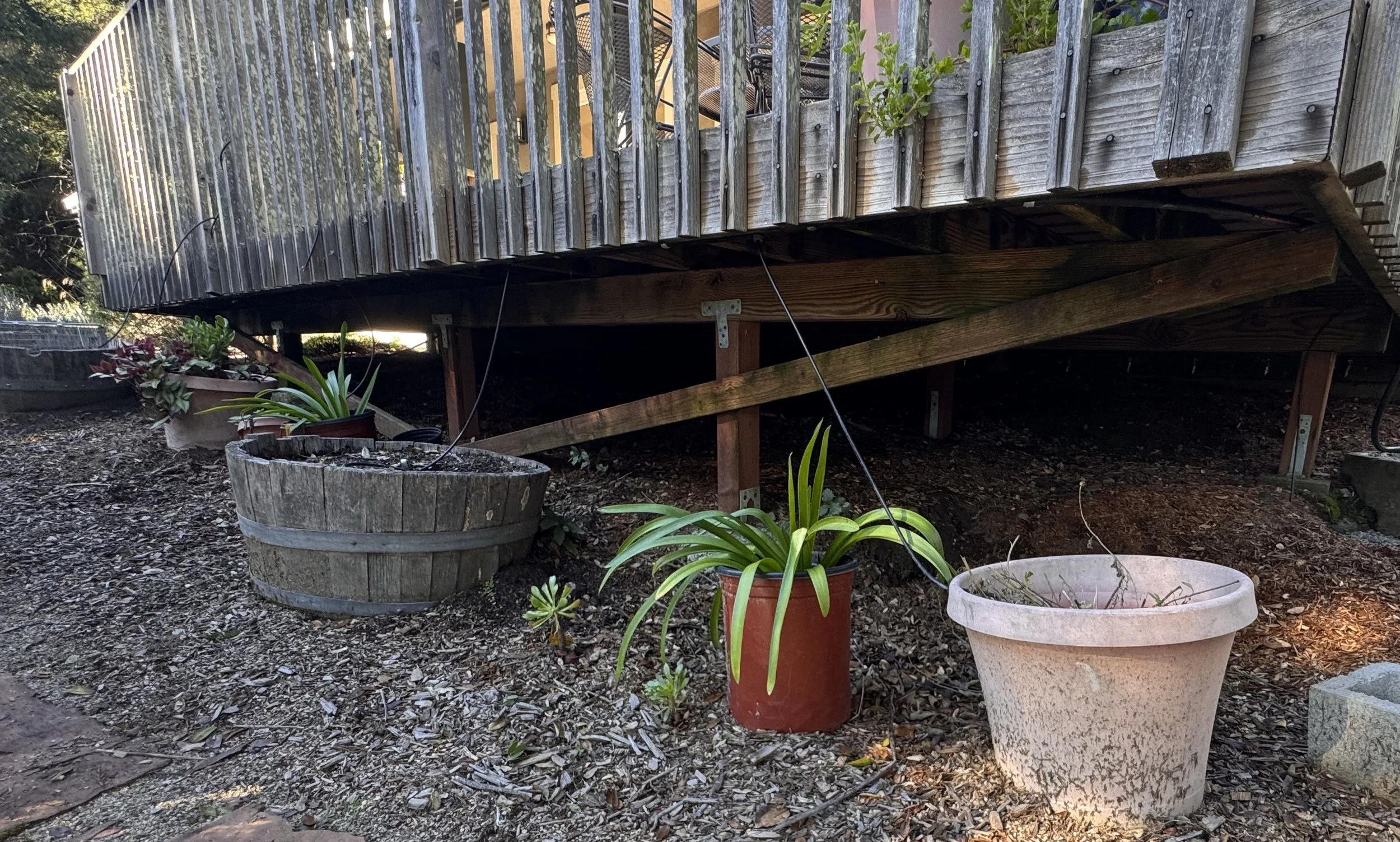
Open Area Under Deck
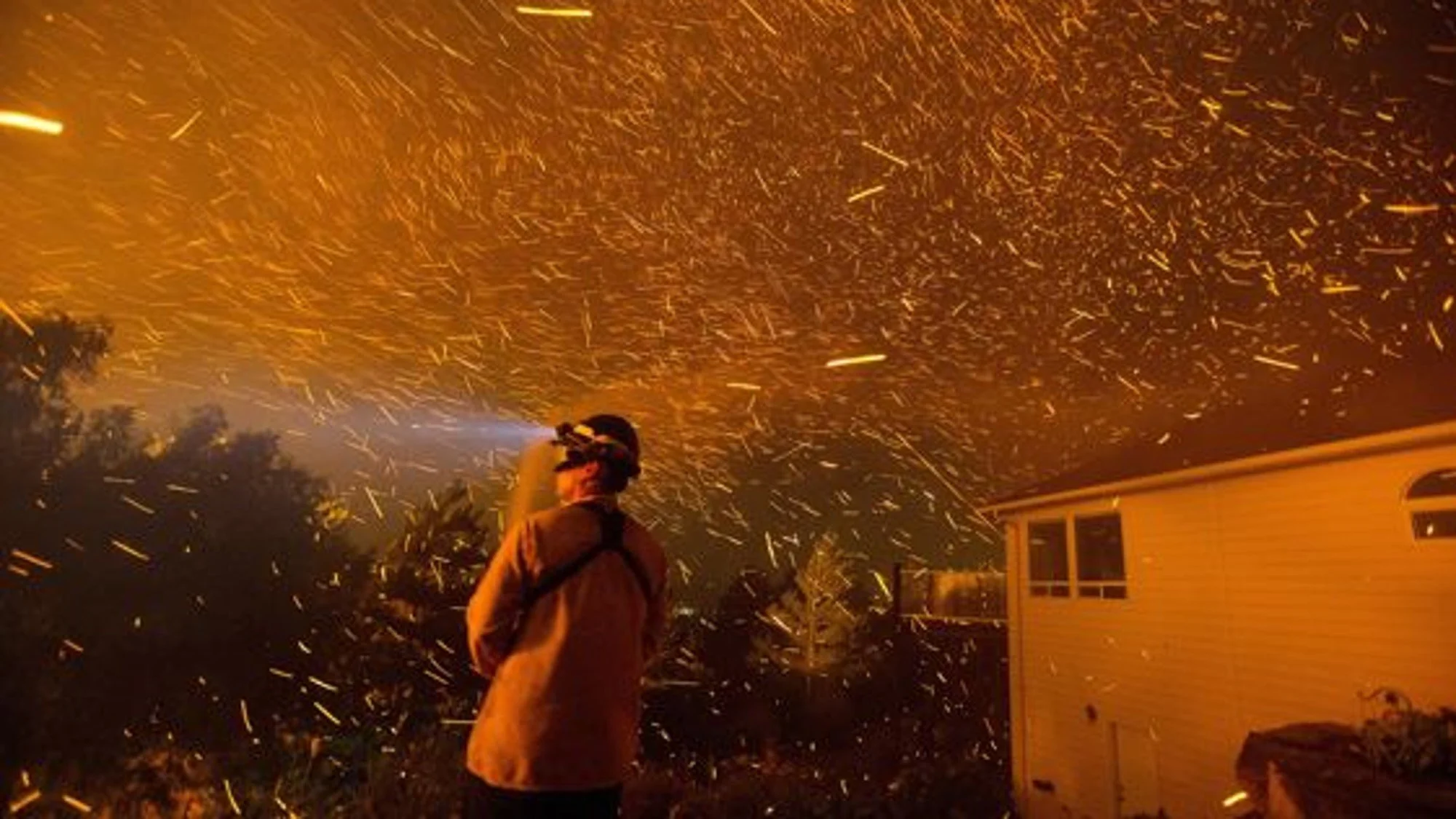
More than 90% of homes damaged by wildfire are ignited by flying embers. Open areas under a deck are the perfect place for those embers to accumulate. If those embers land on a pile of leafy debris or dry mulch, the resulting fire can ignite the whole dry deck. Can you imagine what the resulting bonfire could do to your home?
Mitigation is easy:
Enclose the area under the deck with 1/8” metal mesh or fire-resistant panels (Hardiboard).
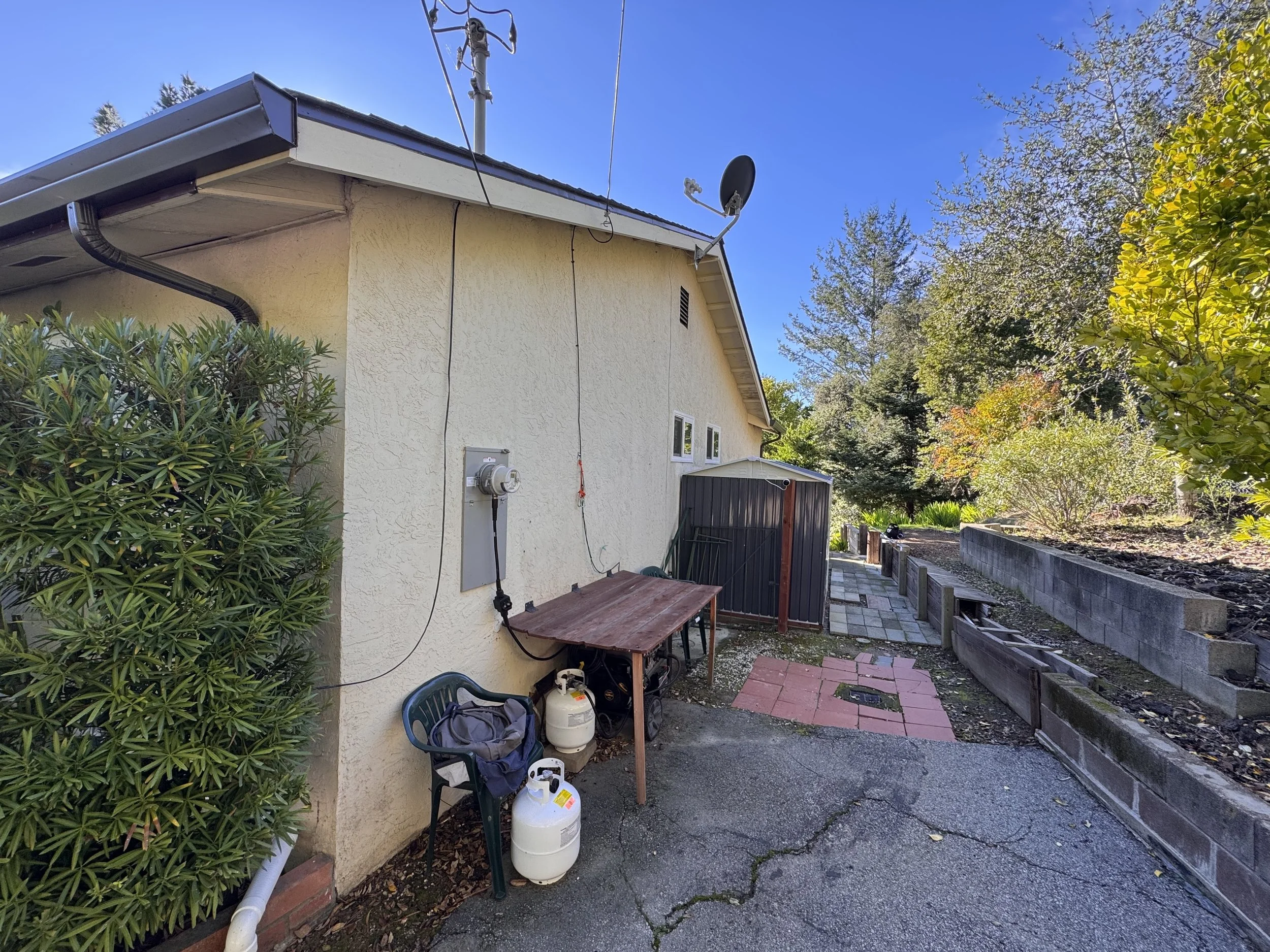
Combustibles against house
The dry wooden generator cover hides an accumulation of leaves going back a couple of years. A fire under there will ignite the propane tanks, which explode like bombs during a wildfire. The metal shed has a collection of dead leaves on the roof where it meets the house. And those thick bushes on the left conceal lots of dead wood and debris.
Mitigation is easy:
The many risk factors in this photo could all be fixed in a few hours:
Move the generator and propane tanks away from the structure and clear away all the debris.
The metal shed is OK next to the house, but keep the roof valley clear of debris.
Trim the bushes in front of the house, and cut out all the dead branches.
Damaged Soffit
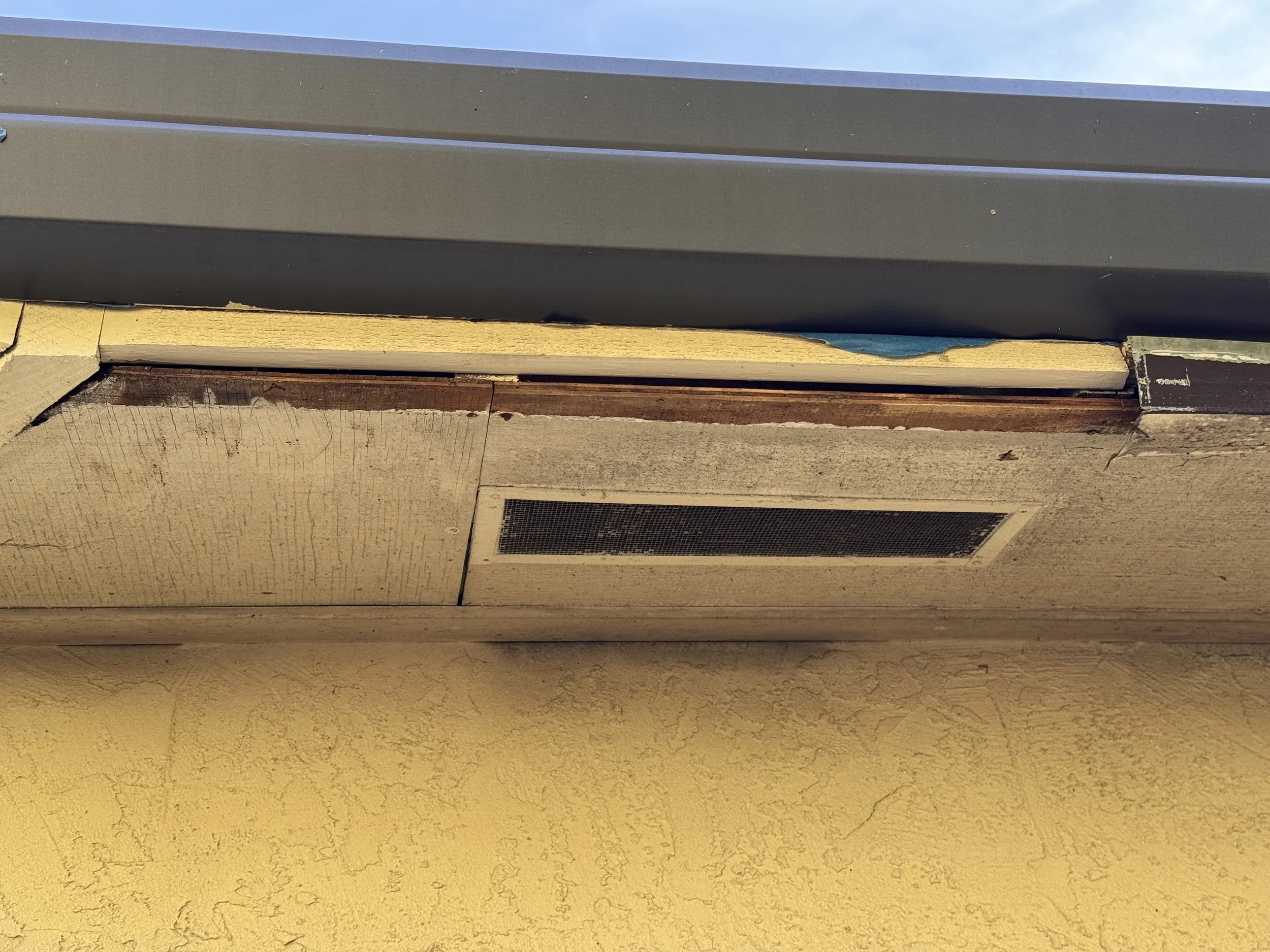
Brown metal flashing covers the edge of the soffit on the right. But that flashing was damaged by a ladder, exposing the edge of the plywood soffit and leaving a 1/2” gap into the attic. Wind-blown embers can enter this gap and ignite the plywood and attic. Remember, wildfires create strong winds that can blow burning embers more than a mile!
Mitigation is easy:
Replace the missing brown metal flashing, and repair any water damage to the eaves and soffit.
Dry Lumber against Fence
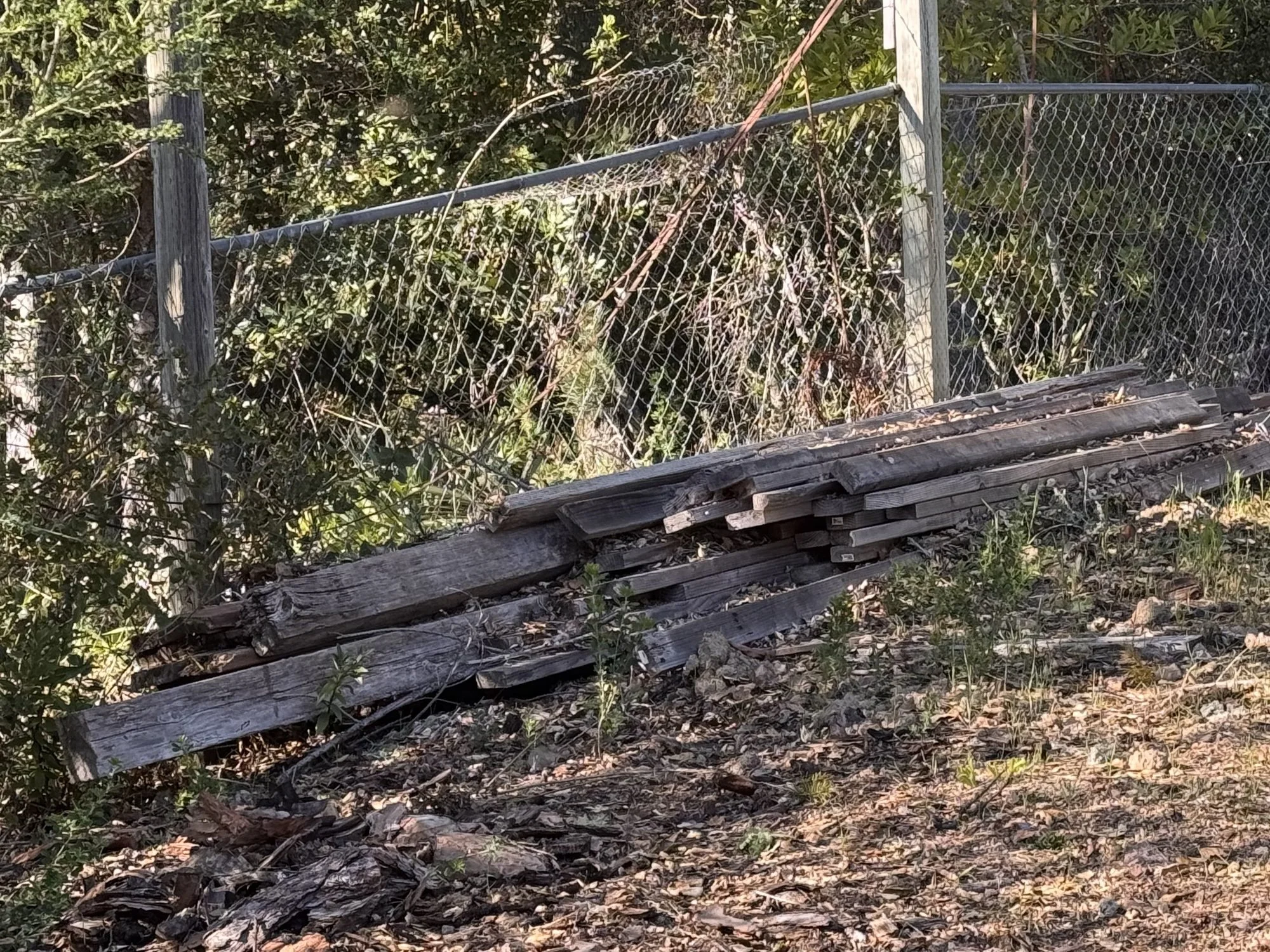
This lumber was intended for a nice deck, but that was years ago. Left out in the elements, it is now just wildfire fuel.
Mitigation is easy:
Salvage the usable boards and store them out of the weather. Dispose of the rest.
Gaps Into Crawl Space
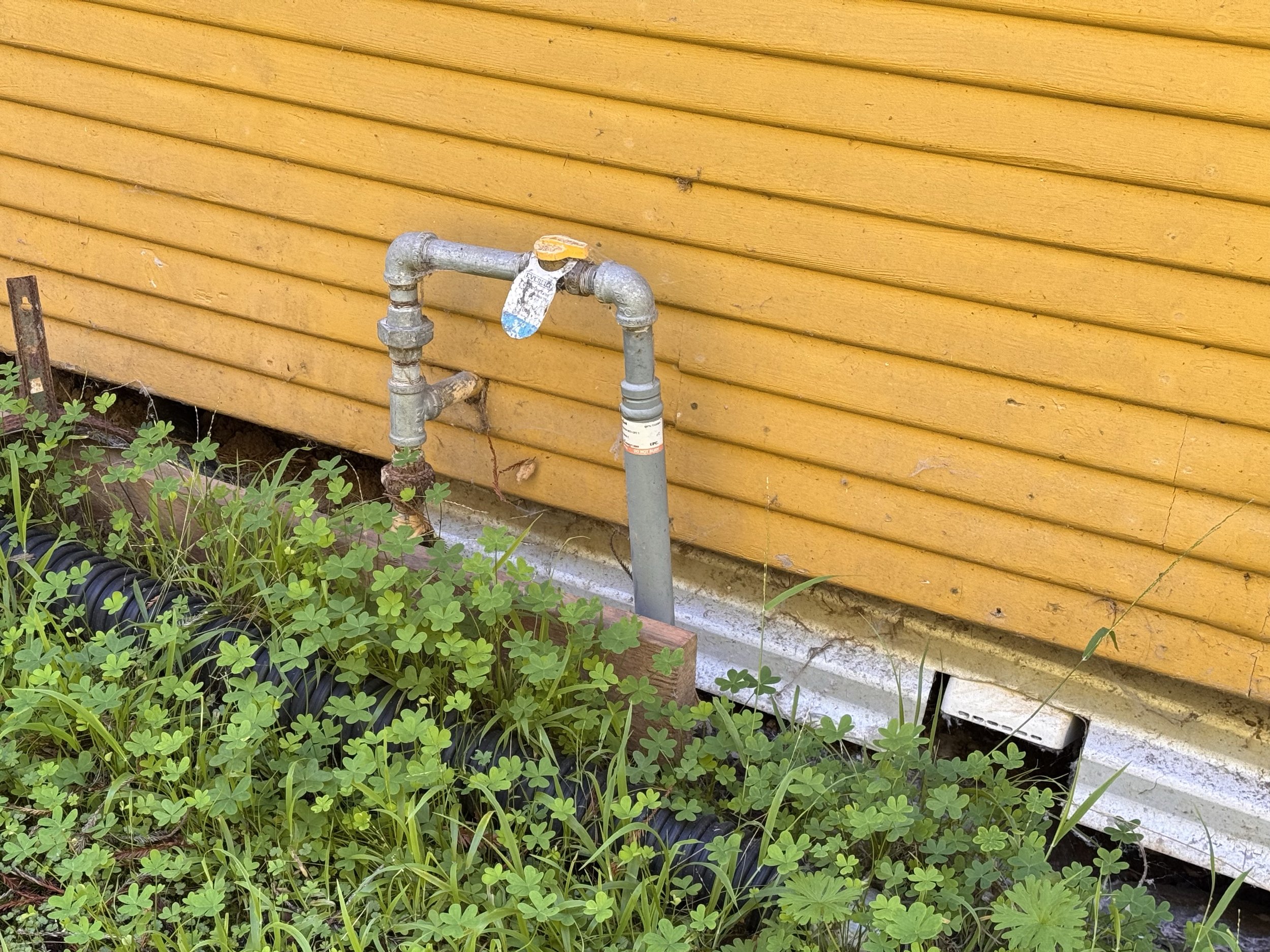
To the left of the pipes, you can see a 6” gap into the crawl space. On the right side, someone has installed metal flashing, but also cut a large rectangular hole. Embers and burning debris can easily enter these gaps. A small fire under the home could easily ignite the framing and the cedar lap siding.
Mitigation is easy:
Install the same metal flashing to cover all the gaps, anchoring it firmly to the frame and foundation. Install vents with 1/8” metal mesh to provide crawl space ventilation.
Low Branches
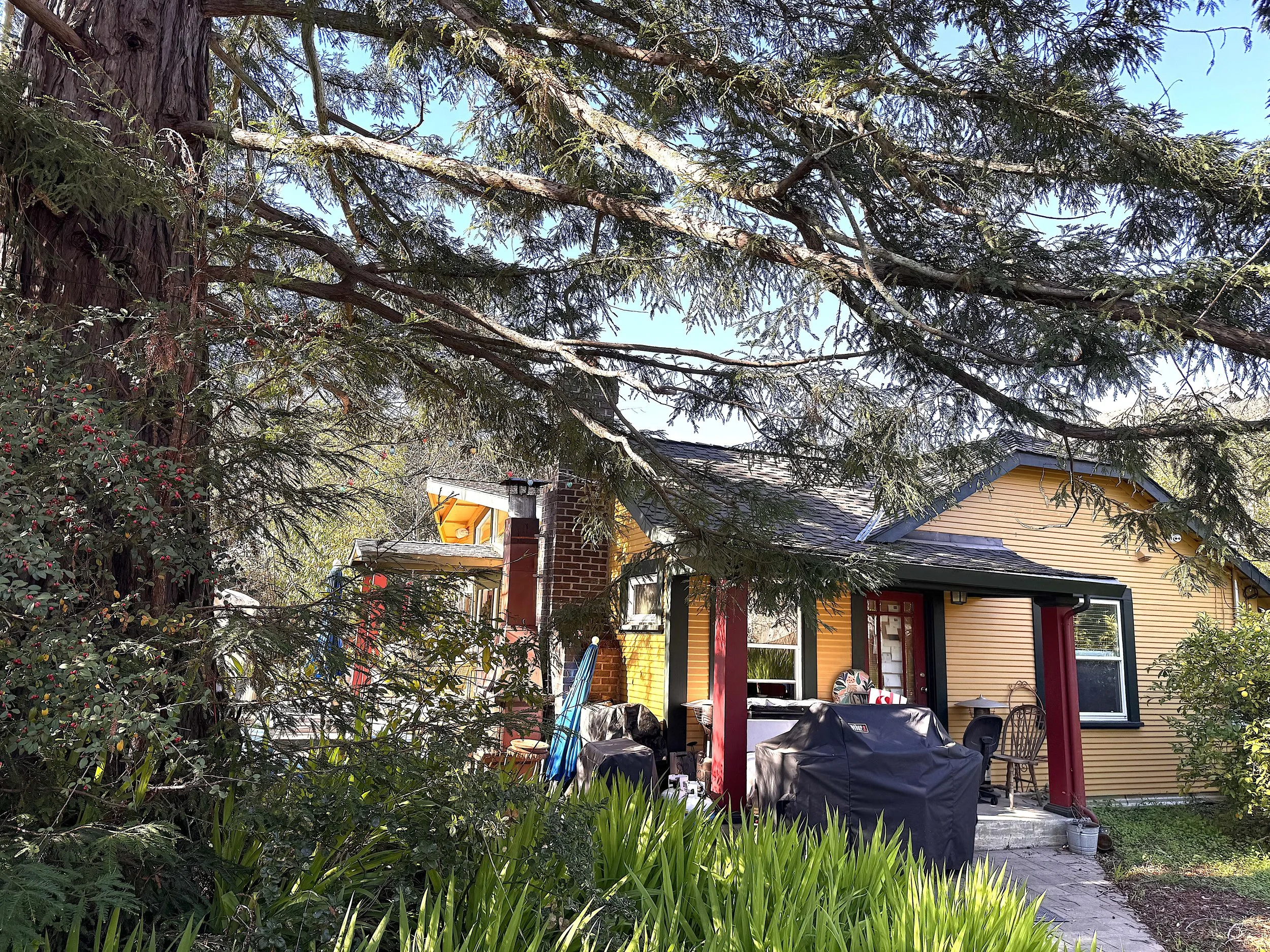
This beautiful old conifer provides lots of shade. But the lower branches are rubbing up against the porch roof. Those lush green plants show that the landscape is well maintained and watered.
Mitigation is easy:
Remove the lowest branches that come within 10 feet of the house. Enjoy the shade for decades to come.
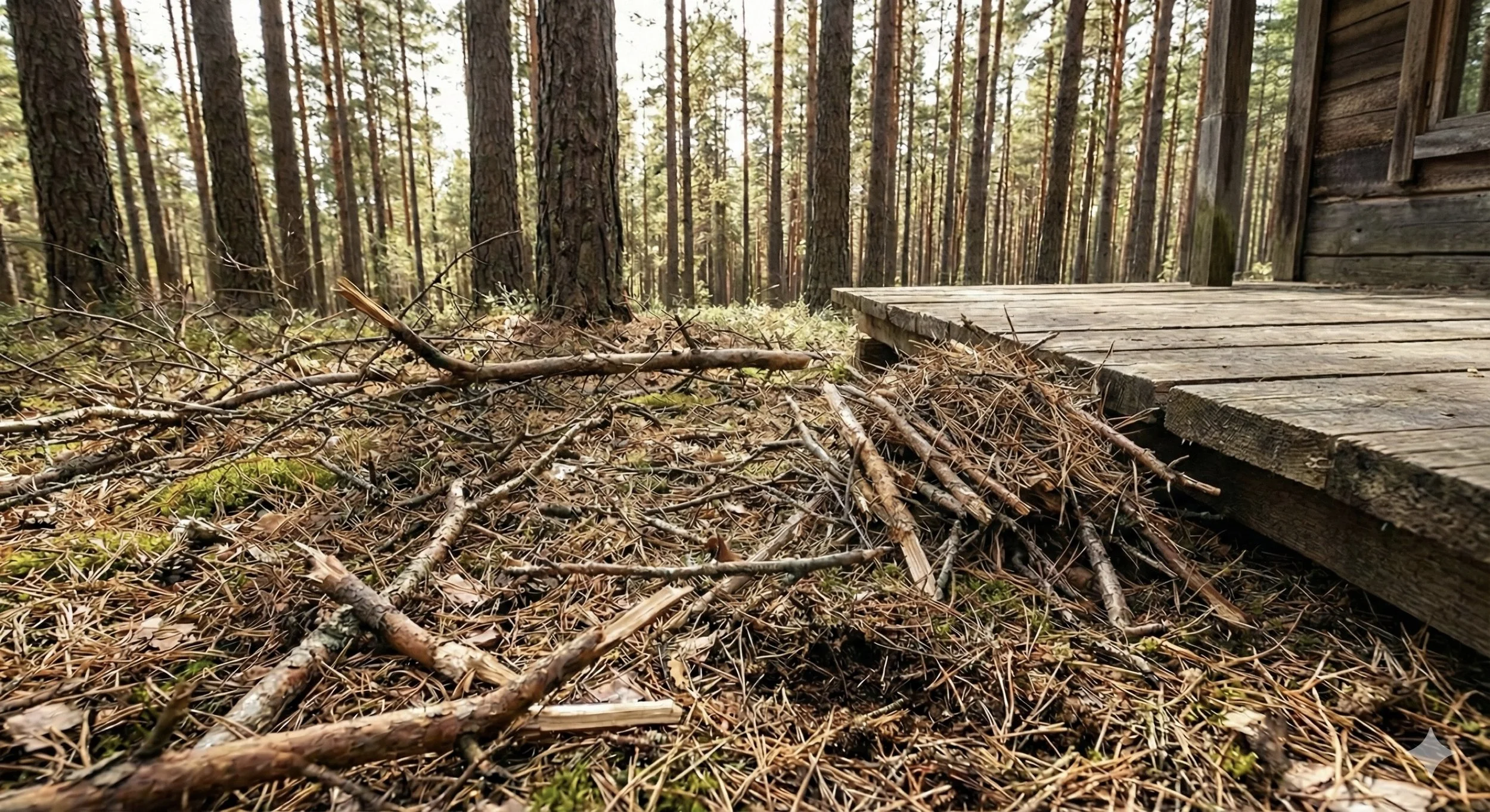
Remember: this campfire kindling in the forest…
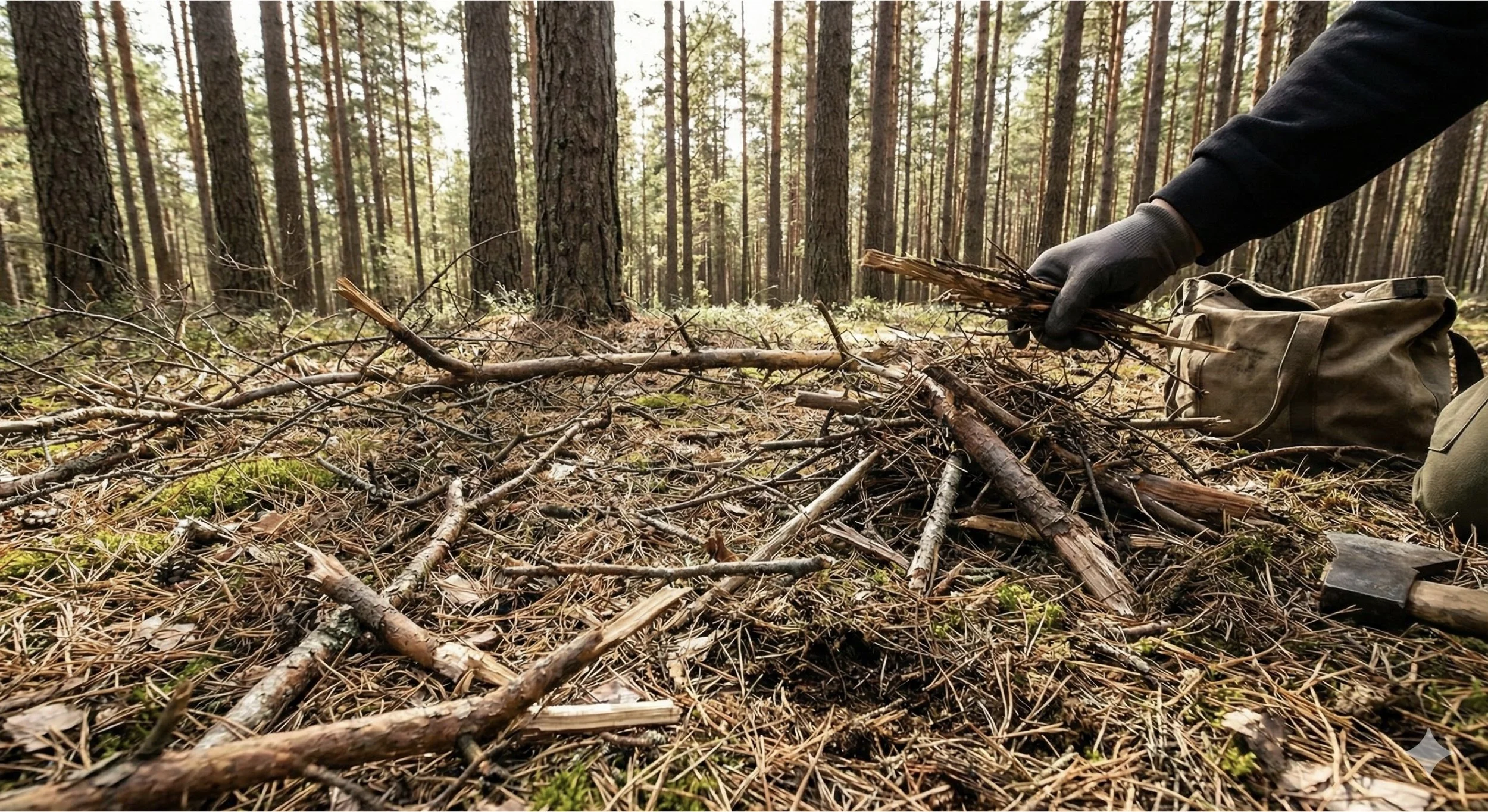
…can ignite your home just as easily!