
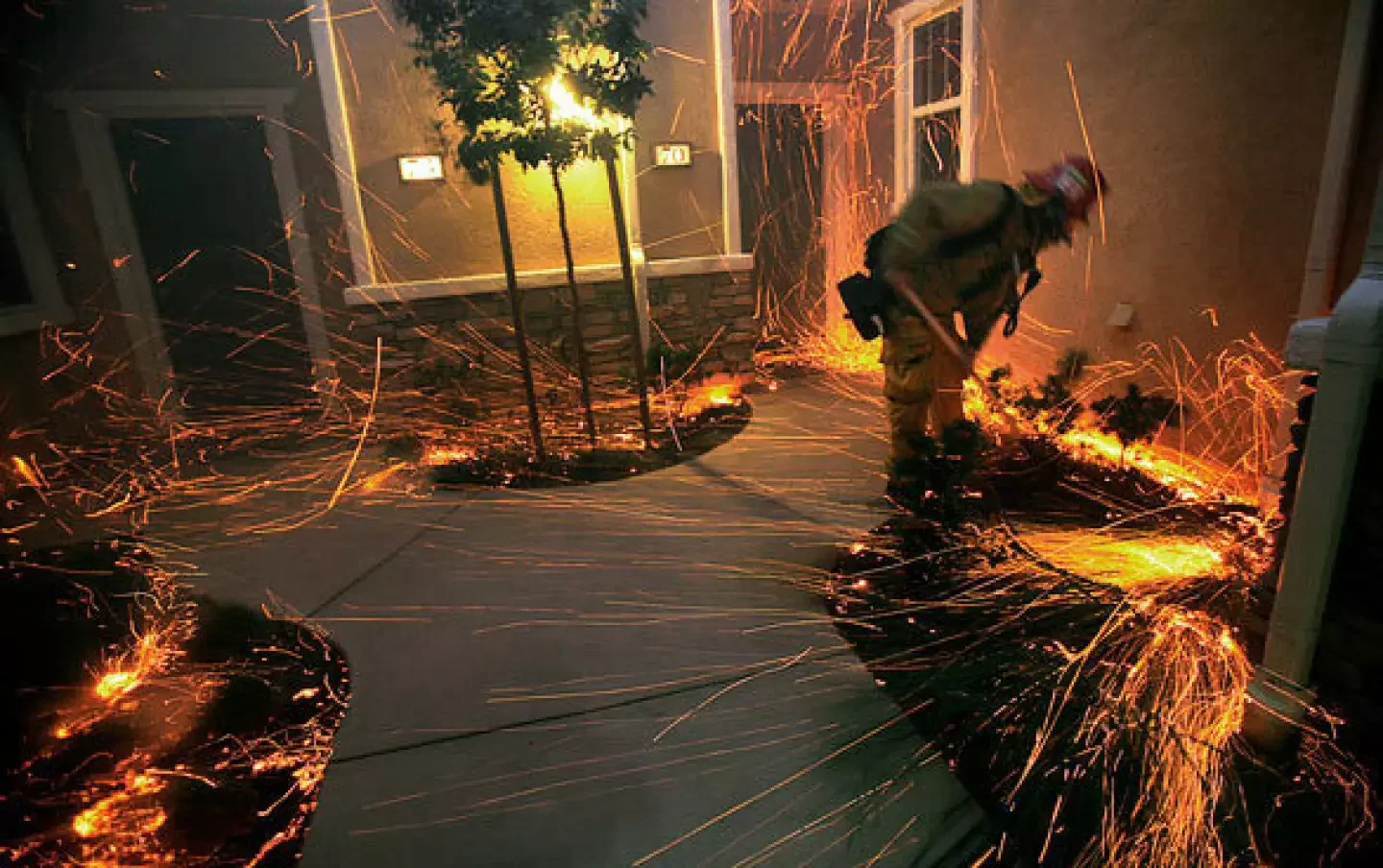
Vents: Where Embers Enter
If your home was built in the 1990s or earlier, the original vents may not protect your home from burning embers
Vents are holes in your home
A good way to think about vents is that they are holes in your home. They serve important roles in maintaining temperature and preventing moisture buildup. But if they are not designed to keep out embers, vents may be the most vulnerable part of your home in a wildfire!
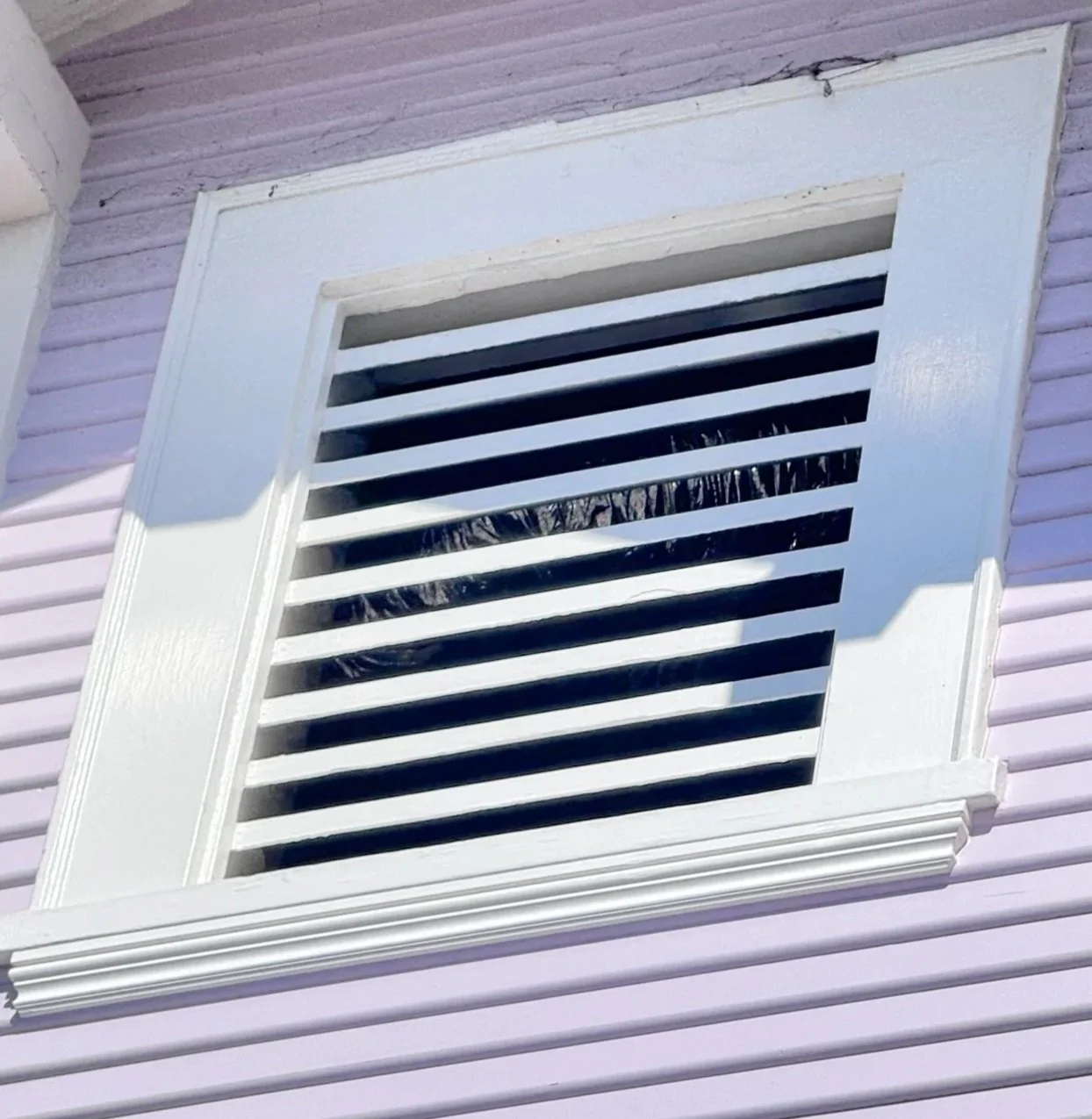
This gable vent is a good example. If you look closely, you can see right into the attic where a flexible duct crosses behind the vent. Given that the gap between the louvers is more than an inch, all manner of birds, bats and bugs can fly right in. So can burning embers.
Burning Embers Can Penetrate ¼” Mesh
Most building codes and insurers require that all vents be protected by metal mesh with openings ⅛” or smaller. There are several ways to meet this requirement:
Remove the vent assembly and replace it with a new fire- and ember-resistant vent
Add a second fine mesh vent behind the existing vent
Manually attach ember-resistant mesh to the back of your existing vents (requires suitable surface for permanent mounting)
Vent Upgrade & Retrofit Options
New Replacement Vents
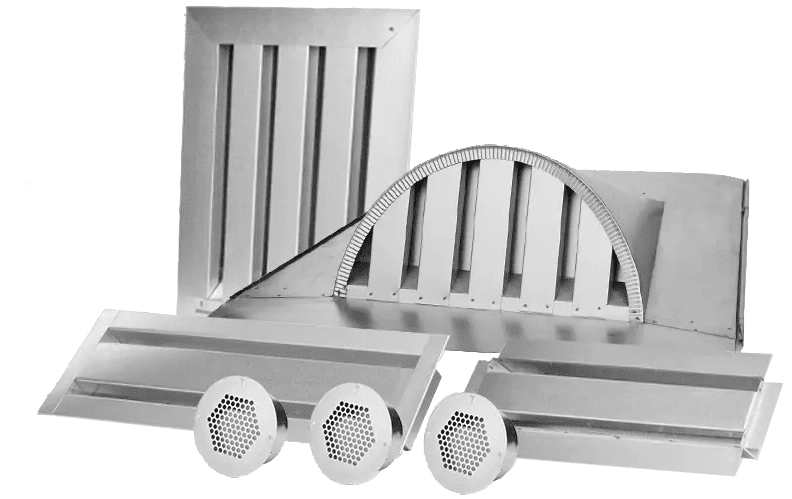
Fire resistant vents are available in many shapes and sizes to fit the openings in your exterior walls. The vents shown above force embers to travel a maze-like path before hitting a fine stainless steel mesh. They also incorporate self-closing intumescent technology that expands and seals off the entry point when exposed to high temperatures and flames.
(image courtesy BrandGuard Vents)
Add a Second Vent Layer
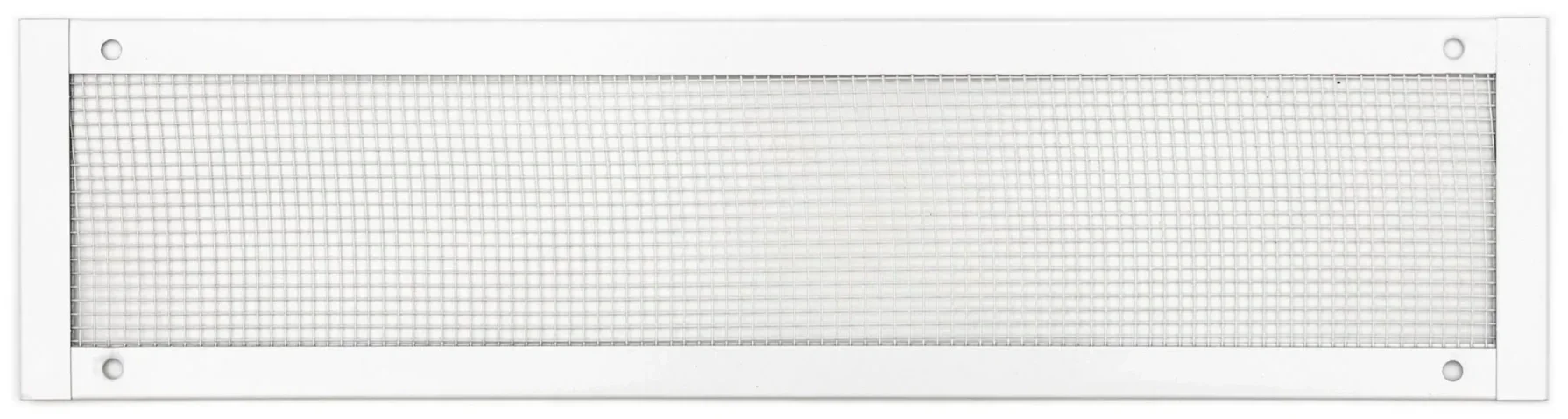
If you want to avoid construction on the outside of your house, you may be able to add a second vent layer with ⅛” or smaller metal mesh. This is installed in your crawl space or attic, behind the existing vent. This approach requires access to the attic and/or crawl space and suitable structure around the opening on the inside to permanently attach and seal the new layer.
(Image courtesy Wildfire Defense Mesh)
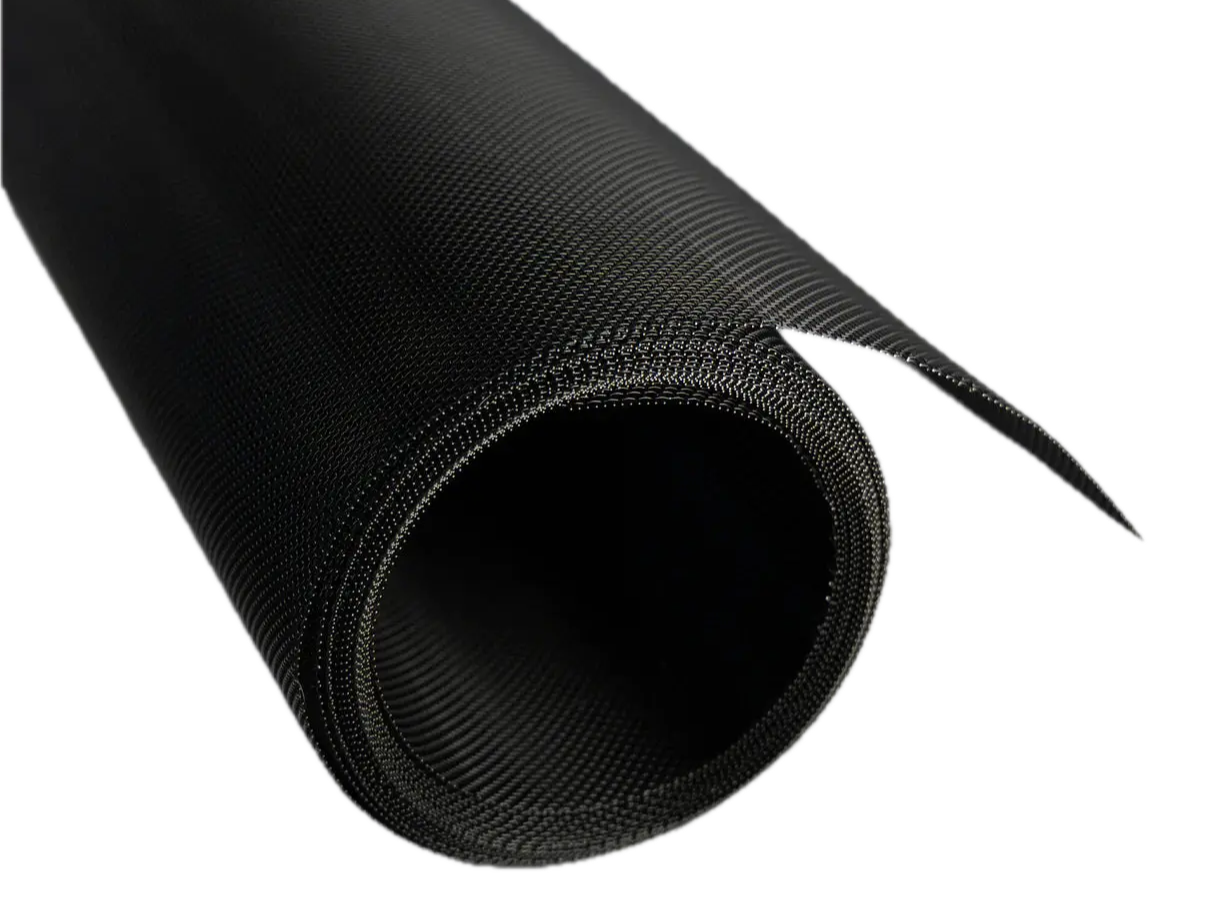
Retrofit existing vents
It may be possible to retrofit your existing vent with new ⅛” metal mesh without touching your home’s exterior. This material is installed in your crawl space or attic, behind the existing vent. This approach requires easy access to the attic and/or crawl space and a structure to permanently attach and seal the retrofit material.
(image courtesy Wildfire Defense Mesh)
Upgraded Vents
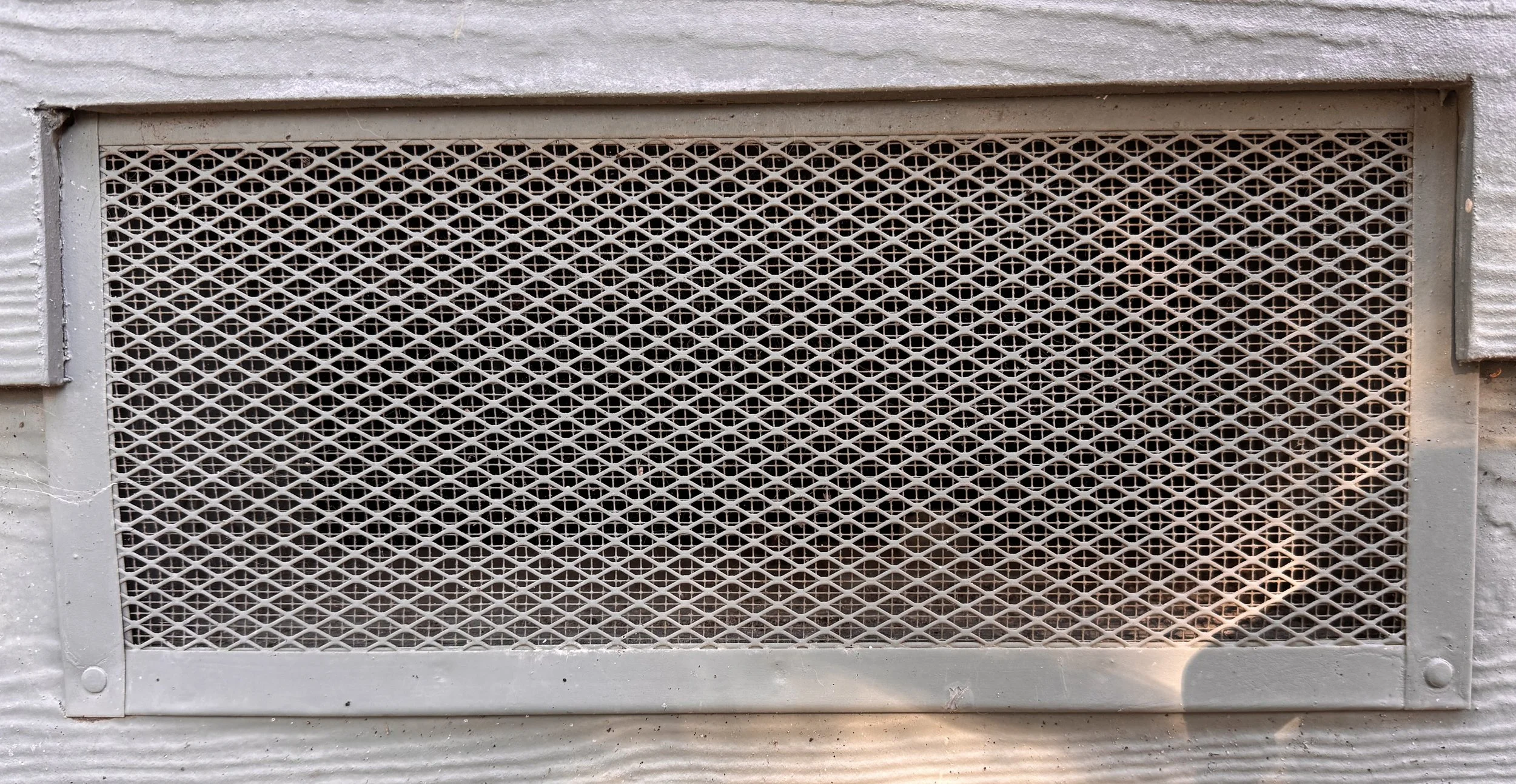
Retrofitted vent
This vent has been retrofitted with a second layer of metal mesh installed behind the original vent. The exterior of the home was not disturbed. This option is possible when the crawl space is easily accessible, and there is adequate structure (framing) behind the vent.
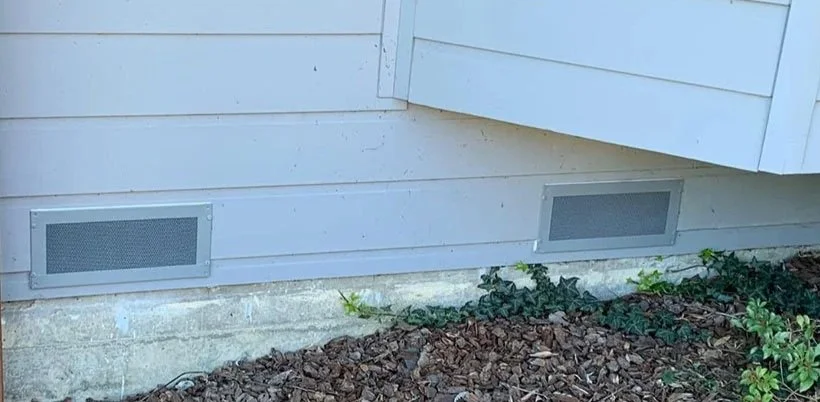
New vent: Exterior Flange
The old vent assembly was removed, and a new, exact-size fire-resistant vent was installed. If an exact-size replacement is not available, the siding and/or framing may need modification. This option may not require access to the crawl space.
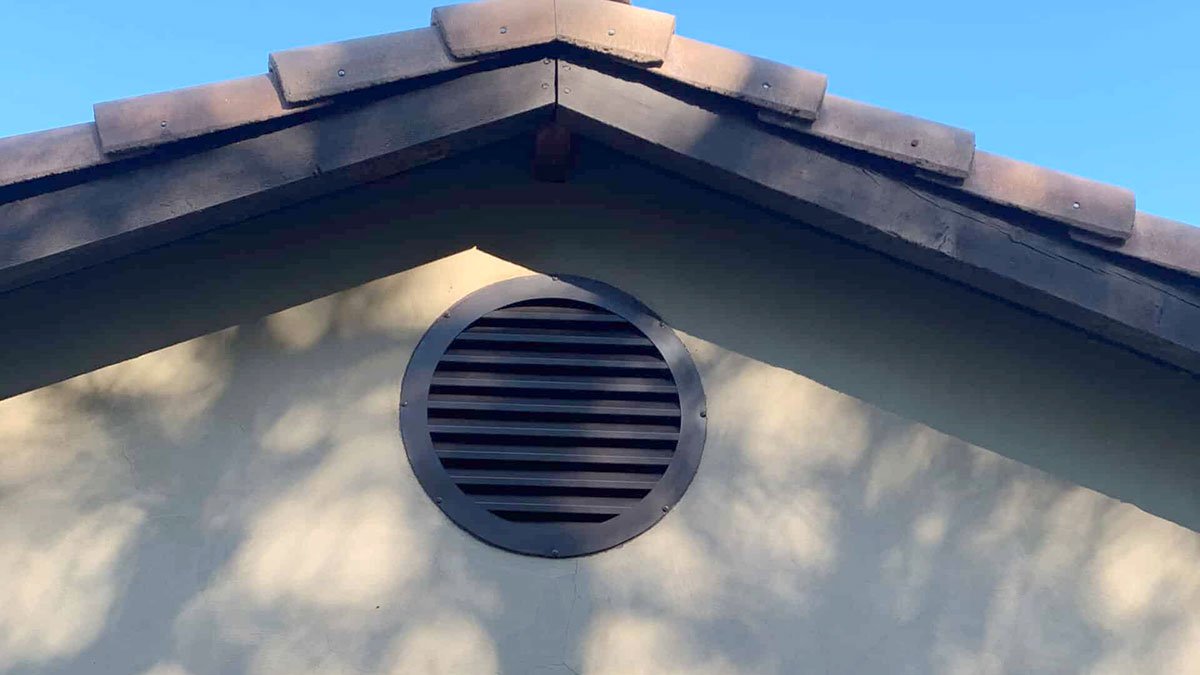
Many shapes and styles are available
You can choose from a variety of vent shapes and styles to upgrade your home’s appearance. Most replacement vents can be painted to match your wall or trim colors.